Disclosure: this page may include affiliate links which may earn me a small commission at no cost to you. As an Amazon Associate, I earn from qualifying purchases.
The following at-home beginner strength training plan uses just your body weight or a few pairs of dumbbells, and it’s made especially for women over 35 who are new to strength training.
This simple beginner’s strength training plan is designed to eliminate the guesswork using a simple 3-day eight exercise full body workout that you do 3 times a week. This plan targets and strengthens stubborn areas like the lower abdomen, love handles, outer thighs, lower back fat, and the backside of the upper arms.
We will also focus on the eccentric phase of strength training exercises (the lowering phase), so women our age can build strength safely. This helps reduce the risk of injury by strengthening muscles, tendons, and ligaments while also improving neuromuscular control as we age.
Why Strength Training After 35 Is No Longer Optional
As we get older, many 35+ women try increasing their cardio workouts to combat the metabolic slowdown of getting older (stubborn weight loss anyone?) when we should also be strength training regularly.
Because it’s not just about weight loss and keeping our metabolism strong as we get older. The benefits of strength training go way beyond that.
Here’s some other important reasons to strength train:
- Prevents muscle loss (also known as sarcopenia). Natural muscle loss begins in our 30’s, so it’s important to include strength training as part of living a healthier lifestyle.
- Increases your metabolism. Building lean muscle helps our bodies burn more calories naturally, which helps counteract our metabolisms slowing down as we get older.
- Protects bone density. Bone density decreases as we age. Strength training helps counteract bone loss by stimulating bone-forming cells to increase bone density and strength. This is especially helpful as we enter perimenopause and beyond.
- Supports a healthy heart. Strength training is mostly an anaerobic activity, which basically means the body breaks down glucose instead of oxygen, providing the following benefits:
- Weight loss
- Increased metabolism
- Better sleep
- Enhanced mood
- Increased energy
- Improved glucose tolerance + decreased insulin resistance (when combined with aerobic activity)
Why Beginner Strength Training at Home for Women Over 35 Works
Starting a new beginner strength training routine is going to need your commitment. The habit of working out will build over time through regular effort, but strength training from home will make it easier to stick with vs going to the gym.
Here are some important reasons why strength training at home works:
- No gym required: Making the trip to the gym adds an extra lay er of time commitment that, unfortunately, a lot of busy people just can’t stick with for very long. We want this to be a life-long habit.
- You don’t have to worry about being intimidated. A lot of women find going to the gym intimidating. Strength training at home gets rid of that factor.
Minimal Workout Equipment is Needed
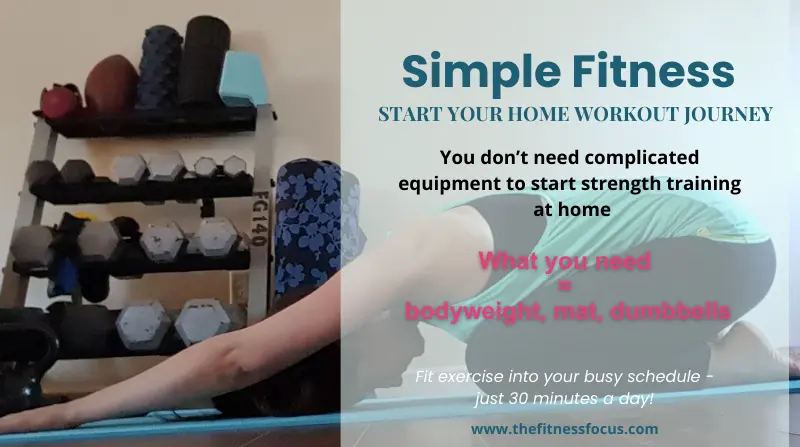
You’re not going to need a full range of dumbbells to start strength training at home. You can honestly just use your body weight and modify exercises depending on your current fitness level.
Here’s a quick list of what works best:
- Yoga mat for floor exercises. This is absolutely non-negotiable if you have hard floors.
- Varying dumbbells weights (at least light, medium and heavy weights) You can also invest in an adjustable weight set to cover your needs as you get more advanced and need more weight.
Why Slow, Controlled (Eccentric) Reps Work Better After 35
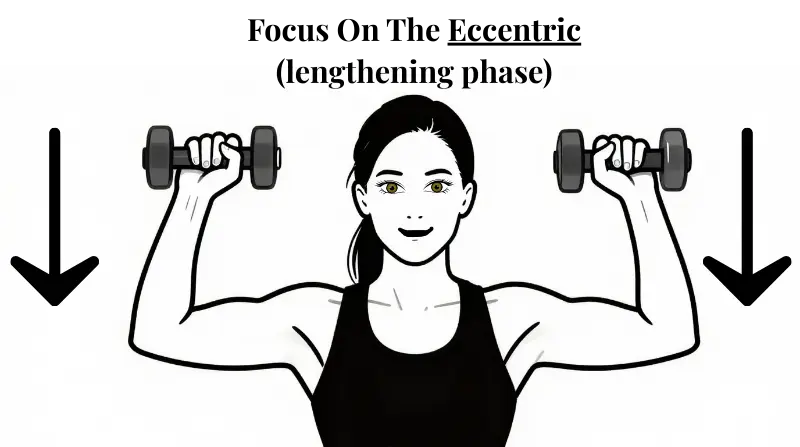
As we get older, the connective tissue between our joints starts to wear down from use. This is osteoarthritis. Almost every woman over 35 has a little bit of arthritis somewhere and may not even realize it yet. This is why focusing on the eccentric phase of the strength training move can help protect your joints. Slowing down the eccentric phase reduces joint stress and strengthens tendons, especially helpful for areas like our knees, hips, and shoulders.
How slow should you lower the weight to get the most benefit? For most exercises the recommended lowering phase should be about 3 to 1. Which means 3 seconds down, 1 second up.
Examples of concentric phases of common strength training exercises:
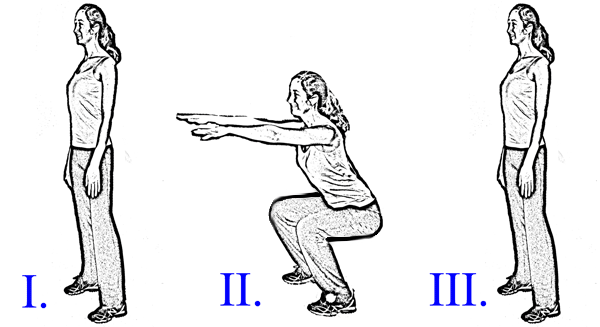
- Lowering into the sit part of a squat
- Lowering to the floor during a push-up
- Lowering the weight back down during a bicep curl
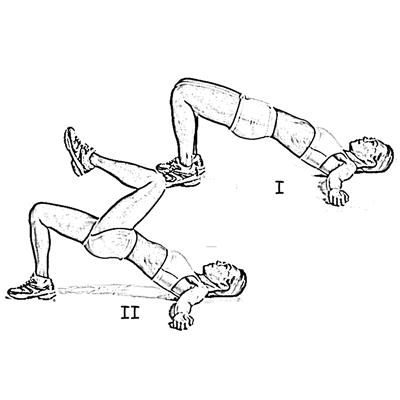
- Lowering your butt back down to the floor after pushing into a bridge
How Often to Strength Train As a Beginner?
When strength training, you need to let your body rest between workouts so your muscles can recover. For this beginners program that uses your full body, workouts should be done every other day with a two-day break at the end of the weekly cycle. Start with starting with 2-3 full body sessions per week. Here are some sample schedules:
- Monday, Wednesday and Friday
- Tuesday, Thursday and Saturday
This allows for 2 full days of rest before repeating the plan, which is optimal.
You can do your workout whenever it fits best into your day and week. The one thing I’d recommend is making the time you work out consistent. Schedule your workout into your planner or try stacking it onto something you do daily such as after you get home from work, change your clothes, put on your sneakers, and do your workout.
I usually alternate strength training with cardio days (brisk walks or jogs) when I’m not following a dedicated at-home workout program online. The most important thing is to train when works best for you, so you can stay consistent.
My Simple 8-Move Beginner Strength Training Plan (Fully Body)
When you’re first starting out with an at-home strength training workout, I strongly suggest a full body routine. This allows you to get used to some of the most fundamental strength training exercises and work your entire body.
Here’s a quick strength training routine I’ve done and highly suggest if you haven’t worked out before or it’s been a while:
Strong & Simple: A 3-Day Beginner Strength Program
Warm-Up (5 min)
- March in place
- High knees
- Arm circles
Circuit 1 – Lower Body(8 min):
- Bodyweight or Dumbbell squats → 10-12 reps
- Reverse lunges → 10 reps per leg
- Glute bridges → 12 reps, with 1-second hold at top
- Repeat circuit 2 times with 30-second rest between circuits
Circuit 2 – Upper Body Push & Pull(8 min):
- Pushups (wall, knee or standard) or chest press → 10-12 reps
- Dumbbell shoulder press → 10-12 reps
- 1-Arm dumbbell row → 10 reps per side
- Straight leg deadlifts → 12 reps
- Repeat circuit 2 time with 30-second rest between circuits
Circuit 3 – Core(2-4 min):
- Plank (30-45 seconds)
- Dead bugs (30 second hold 5xs)
- Repeat once if you have the time
Cool Down & Stretch (3-5 min)
- hamstring stretch, quad stretch, chest opener, child post
Pro Tip: Focus on the eccentric (lowering) part of each exercise slow down for 3-4 seconds, and up for one second.
Download the Strong & Simple Simple Plan with Tracker Here
A circuit is a group of exercises performed back-to-back with little to no rest in between before taking a short period of rest and starting the circuit again. Performing exercises this way helps keep your heart rate elevated while getting more strength training in a shorter amount of time. That makes it easier to fit into even the busiest days.
If you want more structure and guidance, there are also home workout streaming sites that you can read more about in my BODi review.
How to Progress Safely After 4 Weeks
After four weeks following this Strong & Simple program, you can start to add in extra weight or additional exercises. It’s up to you, and how you feel. I’ll also be creating an intermediate follow-up to this plan to help you advance at your own pace.
Common Strength Training Mistakes Women Over 35 Make
Here are a few of the most common mistakes women over 35 make when starting a strength training workout.
- Using too much weight
- Doing too many different exercises
- Strength training on too many days (too often)
- Going to muscle failure instead of stopping a rep or two before you can’t do anymore reps
All of these mistakes lead to fatigue, muscle soreness, and ultimately quitting before you get the results you’re hoping for.
Frequently Asked Questions About Beginner Strength Training at Home for Women Over 35
Is strength training safe after 35?
Yes. Strength training is not just safe for women over 35, it’s beneficial for our hearts and our joints. But as disclaimer: always check with your medical professional before starting this or any fitness program.
Can strength training improve heart health?
Yes. Strength training is mostly an anaerobic exercise, which gives you almost all the benefits of aerobic exercise, plus a few extras like reducing blood sugar levels for up to 24 hours after training. In fact studies have shown that strength training helps reduce post-meal blood sugar levels.
How long before I see results?
How soon you see results from lifting weights depends on where you’re starting. What does that mean exactly? It’s how much extra weight you have to lose and how “in shape” you are already. One thing you can expect is to feel stronger quickly in just two weeks. But really seeing the results takes la little bit longer, around four weeks depending on where you are now.
Pro tip: Make sure to take before photos if you want to see the results. I realize many women don’t like taking photos of themselves for this reason, but it’s important. Because a lot of times, you can’t see results and may get discouraged, but then when you see where you started and where you are every four weeks, you’ll see how far you’ve already come.
Do I need heavy weights?
When you’re first starting to strength train, I would recommend having light, medium, and heavy weights. By heavy, I mean 10-15lbs. Here is a guide on how to choose what size weight to start with.
Final Thoughts: Strength Training as a Long-term Investment in Your Health
When a lot of people think of staying healthy as they get older, they think of cardiovascular exercise like cycling or walking. But the new science of health tells us strength training is just as, if not more important than cardio.
With the many benefits strength training brings to your body and mind, it’s time to add strength training to your workout routine. And if you haven’t worked out before or it’s been a while, I hope this simple strength training plan above gives you a great place to start.