Disclosure: this page may include affiliate links which may earn me a small commission at no cost to you. As an Amazon Associate, I earn from qualifying purchases.
Ever left your reheated coffee in the microwave only to find it the next day when you go to reheat your coffee again?
Or maybe you’re functioning on five hours of sleep, dealing with school drop-offs, struggling with work deadlines, finances, never-ending laundry, and the mental load of remembering everyone’s schedules.
As a mom of three younger kids, I can tell you that feeling exhausted is common. And even if you’re not a mom, the weight of adulting can take its mental toll with so many responsibilities.
The worst part? Caffeine isn’t the best answer.
Luckily, there are natural, more realistic ways to stop the tiredness.
1. Start Your Day With Protein Before More Caffeine

I’ve learned not to drink coffee or anything but water within the first 30 minutes of waking up in an attempt to avoid inflammation. Does it actually work? I have no idea. It just seemed easy to do. I’ve also learned to start my day with protein.
Because starting your day with protein instead of caffeine helps with these things:
- Stabilizes your blood sugar.
- Reduce crashes throughout the day.
- Supports neurotransmitters.
And while I’m not the most creative when it comes to getting my protein in every morning, I tend to opt for one of these choices, which are all easy add protein to your breakfast:
- Eggs
- Greek yogurt
- Meal replacement protein smoothie
- Protein shake
- Cottage cheese
Quick tip:
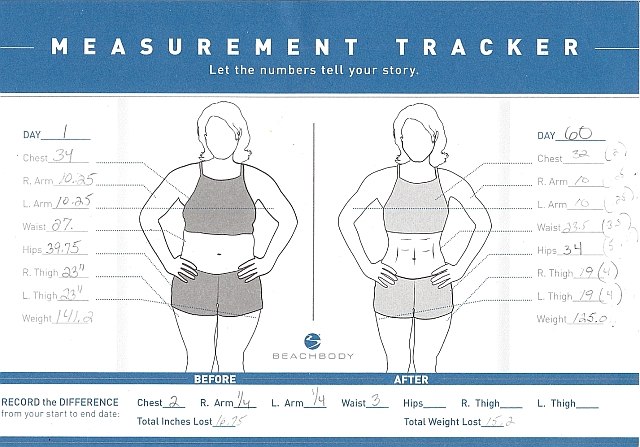
Aim for 20–30g protein at breakfast. I will tell you that after prioritizing protein at every meal, it didn’t just improve my energy, it also helped me start seeing the weight fall off that had been so stubborn to move before.
Learn more about why protein is so important after 35 here.
2. Get Some Sunshine Within the First Hour of Waking Up

Going outside and getting some sunshine supports a better mood. It’s been scientifically proven. Here’s why it works:
- It supports your body’s natural circadian rhythm.
- It helps regulate melatonin levels throughout the day.
- It improves daytime alertness.
If you’re thinking it’s impossible to get any morning sunshine without totally ruining your morning routine, here are some of my favorite ways:
- Drink your morning coffee, tea, or water outside.
- Take your dog (or your baby or toddler) for a morning walk.
- Go outside to meditate, relax, or simply enjoy nature while you sit on the porch.
Even 5–10 minutes of morning sunshine can help.
3. Stop Skipping Water

Our bodies are made up of mostly water, so even mild dehydration can contribute to some surprising feelings such as fatigue, headaches, and even brain fog.
So the most simple strategy you can implement is to start your day with an 8oz glass of room temperature or war water before your coffee, before breakfast, before anything. Cold water will work too if you absolutely can’t drink tepid, but warm water has been shown to be even more beneficial in the morning and won’t shock your system first thing.
4. Take “Energy Walks” Instead of Energy Drinks
There’s been a surge in energy drink consumption over the past couple decades, since it’s a quick pick-me-up. But now that we know these quick caffeine pick-ups aren’t the best for our bodies.
Here are the reasons walks work better:
- A walk will improve circulation by getting your blood flowing. This will boost energy naturally. It’s exactly why walking is one of the best low impact exercises for women over 35.
- Walking improves your mood. It is an instant mood boost, especially if you get out into nature.
- Walking can reduce afternoon slumps. I know when I was working in an office downtown, a few of us from the office would almost always go for a 30-60 minute walk right outside of the busy downtown streets. It was a great way to socialize and get some sunshine.
And the best part? No gym membership is required.
But don’t think you have to go for a 60-minute walk every afternoon, even just 5 minutes of a brisk walk around the block can help.
5. Eat to Avoid the Afternoon Crash
Ever feel good most of the day, then suddenly at 1 or 2pm, you feel like you could take a nap? I know I often do! It’s pretty common and completely annoying when you’re trying to get anything constructive done.
This can be due to a few different factors. Here are the most common ones:
- Your body’s natural circadian rhythm lowers at that time of day.
- If you’re eating higher carb lunches, they cause blood sugar fluctuations that leave you feeling sluggish.
- You haven’t drunk enough water – remember water makes up roughly about 60% of our bodies, so our bodies need it to function at an optimal level and feel our best.
- You’re not getting great sleep quality.
Here are some ways to avoid that afternoon crash feeling: Eat a more balanced meal at lunchtime complete with protein, fiber, and healthy fats.
Some healthy lunch ideas:
- Salad with chicken, lots of veggies, avocado, beans, nuts and oil-based dressing.
- Turkey on whole wheat wrap with lots of veggies and healthy condiment.
- Tuna bowl with all your favorites.
The reason these ideas will help is they not only prevent your blood sugar from crashing and making you feel tired, these type of well-rounded meals will also provide your body with lasting, natural energy for the hours following lunchtime.
It’s also a great time to take a quick walk after eating for an added energy and metabolism boost.
6. Reduce Decision Fatigue

When you’re managing a household, career, finances, and relationships, decision fatigue becomes a real issue in your daily exhaustion levels. I know I felt extremely tired when my youngest started becoming a real person as I was beginning to get back to working full-time.
Here are some easy ways to help relieve some of the daily decision fatigue:
- Meal plan and prep ahead of time for at least a few days each week. I try for the entire week, so I’m not always left every morning wondering what to have for dinner.
- Keep recurring grocery lists of the higher-use foods in your home. We do staples like milk, Greek yogurt, fish, chicken breast, healthy bread, veggies, and favorite fruits and veggies.
- Donate clothes you don’t wear often. Aim for keeping a capsule wardrobe, which is just a limited number of classic, higher quality clothing that can be mixed and matched easily.
- Create family routines like movie night, game night, lessons, sports, etc. to maintain a regular schedule that prevents guessing.
I think the most important thing to remember is that mental energy matters just as much as physical energy. And if you’re stressing about what you’re going to have for dinner every night, that’s just one more stressor in your life that you don’t need, which leads to fatigue.
7. Build Mini Recovery Moments Throughout the Day

I remember watching a home renovation show a while ago where the designer always created a small place for the mother or wife to escape to. At that time, I didn’t have kids, but I thought it seemed like a good idea just for me to have my own private escape.
Now after having three children, I realize this isn’t just a great idea, but a must-have haha. But let’s face it, most of us don’t have a spare room to escape to for a few minutes during the day when things get stressful. I know I always hear the bathroom or bedroom is a favorite spot to get away from the family for a moment.
So if you don’t have your own specific peaceful dedicated “mom space” in your home, here are my favorite 5-minute recovery moments:
- Deep breathe or box breathe
- Stretch out your body, including your neck, hips and lower back where we hold a lot of tension.
- Sit outside and enjoy nature. This is one you can easily do with kids of all ages.
- Listen to your favorite music.
- Meditate.
Recovery doesn’t always require an hour-long self-care routine. It can just be about five simple minutes of relaxation.
8. Check for Hidden Causes of Fatigue
While there are some easy fixes to help you feel less exhausted throughout the day, you also need to look at the reasons you’re not feeling well-rested if you have relatively healthy habits overall.
Could Perimenopause Be Making Your Fatigue Worse?
There’s a chance if you’re a woman over 35 that perimenopause or menopause could be causing your fatigue if the usual energy strategies aren’t working anymore.
As hormone levels start to fluctuate, many women notice changes in their sleep quality, the way they handle stress, and overall energy levels. Many women find themselves waking up multiple times a night, feeling especially drained after a stressful day, or even struggling hard with afternoon energy crashes.
The good news is that many of the same habits we’ve gone over above that support energy as a busy mom can also help you feel more energetic naturally during perimenopause:
- Prioritize protein at meals to support stable blood sugar. I ordered myself a special meal replacement shake with 30g of protein to help me get enough protein.
- Catch some morning sunshine to help regulate your sleep-wake cycle.
- Incorporate daily regular movement into your day, even if it’s just a short walk.
- Create a consistent bedtime routine whenever possible. Sleep hygiene is crucial at this stage of life.
- Talk with your healthcare provider if fatigue feels extreme or persistent.
If healthy habits don’t seem to be helping, it may be worth exploring whether hormonal changes, iron levels, vitamin D levels, or other factors could be contributing to your exhaustion. Always check with your doctor.
Signs Your Exhaustion May Be More Than Lack of Sleep
I’m not here to freak you out, but sometimes lack of sleep can be caused by more serious issues than just the baby waking up five times a night or not getting enough protein.
If you suffer from any of these symptoms on a regular basis for more than a couple weeks, please talk to your doctor:
- Constant brain fog
- Waking tired every day despite getting enough sleep
- Excessive hair loss
- Dizziness
- Extreme fatigue despite rest
- Mood changes
Most of these are not life-threatening, but they do take their tolls on your body over time.
Here are some hidden causes of constant fatigue:
- Iron deficiency
- Low levels of vitamin D
- Thyroid issues
- Sleep apnea
- Perimenopause
If you have any of these symptoms accompanying your fatigue, it’s important to seek a medical professional – especially if you’ve tried everything, but still feel exhausted. They’ll be able to talk to you more about what could be going on and perform all necessary tests and bloodwork.
Realistic Energy Habits for Busy Moms
If you’re having trouble remembering these quick energy habits, here’s a simple checklist you can download:
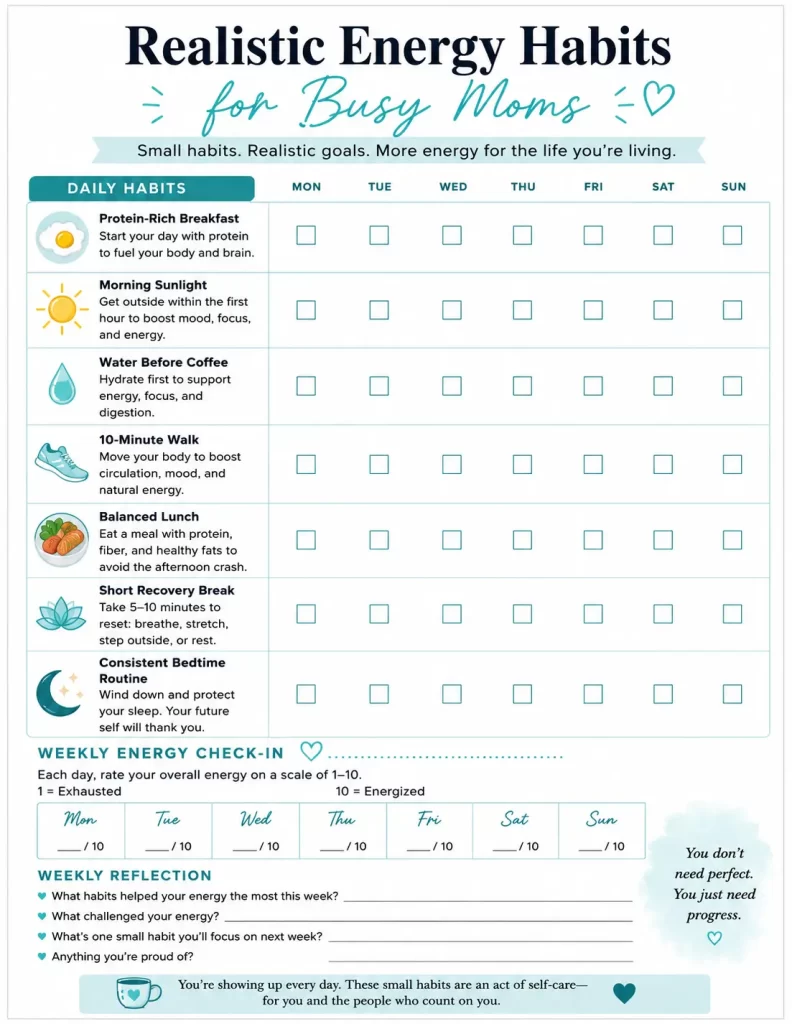
Here is the direct link to the – Realistic Energy Habits for Busy Moms for easy printing. Link opens in a new window.
Conclusion
You don’t need a perfect morning routine, a gallon of coffee, or more willpower to feel better every day.
The surprising truth is that most exhausted moms don’t have an energy problem, they have a recovery problem. And the small habits that support your body throughout the day can help you feel more energized, focused, and present, even during busy seasons of motherhood.