Disclosure: this page may include affiliate links which may earn me a small commission at no cost to you. As an Amazon Associate, I earn from qualifying purchases.
You promised yourself today would be different. Maybe you’d eat healthier. Maybe you’d skip the afternoon cookie. Or maybe you’d try to drink more water.
But after another night of bad sleep thanks to the kids or other priorities, by 2 p.m. all you can think about is chocolate, cookies, chips, or whatever sugary snack is closest to you.
If this sounds familiar, it’s normal. Your exhausted brain is simply trying to solve the lack of energy problem the fastest way it knows how.
Research has consistently shown that lack of sleep increases hunger, changes appetite-regulating hormones, and makes high-sugar, high-calorie foods more appealing.
In this post, you’ll learn all about what’s going on inside yor body and how you can help reduce the cravings naturally.
Signs You’re Actually Running on Empty

If you experience any of the following symptoms, your sugar cravings could mean you’re running on empty.
- Waking exhausted
- Afternoon crashes
- Caffeine all day long
- Brain fog
- Feeling “hangry”
- Irritability
- Craving sweets after eating
If several of these sound familiar, your body may be telling you that it needs more rest. The good news is there are ways to combat the exhaustion and cravings, which we’ll go over in this post.
Why Sugar Is Your Brain’s Fastest Fuel
Your brain mostly relies on glucose for energy. Glucose is a simple sugar. When you haven’t gotten enough sleep or are mentally exhausted, your brain looks for the fastest available source of energy to combat the fatigue.
That’s because sugary foods digest quickly. Plus eating sugar activates your brain’s reward system by releasing dopamine, making those foods feel even more satisfying.
Sleep Deprivation Changes Your Hunger Hormones
Not getting enough sleep doesn’t just affect how worn out you feel throughout the day. There are more serious processes happening inside your body, specifically with your hormones, that can affect your hunger.
Here are the main hormones affected by poor sleep and how they each contribute to increased sugar cravings:
- Ghrelin: This is the hormone that controls how hungry you feel. When you aren’t getting enough quality sleep, your ghrelin levels increase, which makes you feel more hungry than you normally would throughout the day.
- Leptin: This is the hormone that controls how full you feel. When you don’t get enough sleep, your leptin decreases. This leads to feeling not full and overeating.
- Cortisol: This is commonly referred to as the stress hormone. It has an effect on everything in our bodies from our metabolism to blood sugar to reducing inflammation. Not getting enough sleep causes cortisol levels to stay elevated throughout the day, which leads to cravings for high-calorie foods. This is why managing daily stressors is extremely important when you’re trying to lose weight and eat better.
This is also why it’s exceptionally hard to eat well when your kids are little and not sleeping well. Or if you have a very highly demanding career or a schedule that never lets you get enough sleep.
Stress Makes Sugar Even More Tempting

Chronic stress keeps cortisol levels elevated, increasing your appetite and making highly palatable foods like sweets and refined carbs much harder to resist.
Why Women May Notice Stronger Sugar Cravings
Women often juggle demanding careers, children, household responsibilities, hormone fluctuations and caregiving roles, which leads to sacrificing sleep just to fit everything in. These factors combine to create an ideal environment for those sugar cravings.
Understanding that these cravings are often biological and not a lack of willpower can help you approach them with more compassion. As if we’re not tough enough on ourselves, we blame our indulgences on lack of willpower, not chemistry.
- Hormone fluctuations like PMS, perimenopause or menopause can all increase sugar cravings. There are ways to help make these fluctuating hormones less obvious like prioritizing sleep, eating enough protein, drinking lots of fluids, making time for yourself, and stressing less. I know when I’m eating better, my cramps aren’t even as bad, and I don’t crave chocolate as intensely as usual.
- Iron deficiency: Low iron makes you feel tired, which can lead to chocolate and other cravings. Only a blood test will show you’re iron deficient, so if you’re concerned you might be, please see your healthcare provider.
- Low protein intake: Not getting enough protein disrupts those fullness feelings and mood-regulating hormones. This can all lead to cravings for sugary treats. So I cannot stress enough to really make sure you make protein a priority. For most women over 35 that means 0.75-1g of protein per pound of ideal body weight. Here’s a more in depth look at why women over 35 need protein.
- Chronic dieting: Depriving yourself of carbs or overly restricting calories can all lead your brain to want that instant energy. Always aim for a healthy, well-rounded diet rich in all the foods your body needs like lean proteins, healthy fats, fruits, veggies, and whole grain carbs.
- Busy lifestyles: A super busy lifestyle can lead to craving sugar by less healthy eating on-the-go options, stress, and not enough quality sleep. Try planning and prepping your food each week to relieve some of the decision making that comes with making food.
Why Sugar Doesn’t Actually Fix Your Energy
Although sugary foods and chocolate provide you with a quick burst of energy, that boost doesn’t last long. It’s extremely short-lived.
What happens is that after you eat sugary foods, your blood sugar rises quickly, but often it falls just as quickly. This leaves you feeling more tired, hungry, and craving even more sweets than before. That’s why reaching for those sweets can create a frustrating cycle of temporary relief that is followed by more cravings.
Choosing meals with protein, fiber, and healthy fats instead provides your body and mind with steadier energy throughout the day.
The Best Foods to Help Reduce Sugar Cravings Naturally

Here are your best options:
- Lean proteins like Greek yogurt, eggs, chicken, turkey, cottage cheese, beans, etc. help curb cravings by helping your body feel fuller longer, slowing digestion, and stabilizing blood sugar
- Healthy fats like nuts, avocado, nut butters, and seeds help slow digestion and help you feel fuller longer.
- Fiber that you find in berries, apples, oats, whole grains, vegetables and beans acts as a powerful craving stopper by feeding the healthy bacteria in your gut, slowing digestion, and stabilizing blood sugar.
- Complex carbs like sweet potatoes, brown rice, quinoa, amaranth, etc give your body and mind the sustained energy it needs to avoid that instant gratification sugary treats provide.
You can also combine these foods for a powerful and super healthy snack or meal.
Instead of eating just an apple, try an apple with peanut butter or other favorite nut butter.
Instead of crackers, try crackers with cottage cheese, nut butter, or slices of hard cheese.
Instead of plain Greek yogurt, try Greek yogurt with berries mixed in.
Lifestyle Habits That Help Break the Sugar Craving Cycle
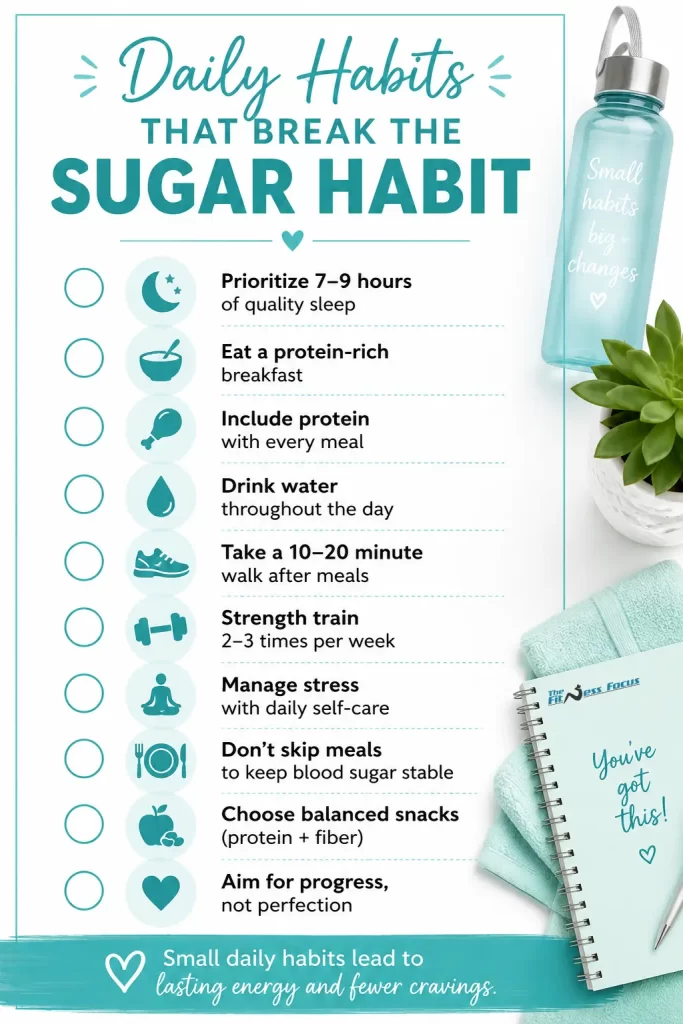
When you find yourself feeling exhausted and craving sugary things, there are several things you can do to help curb the cravings.
Prioritize sleep
When you’re not getting enough quality sleep, it wreaks havoc on your entire system. From stress hormones that specifically make you crave sugary treats to hunger hormones that control how hungry or full you feel, it can become a vicious cycle if you’re trying to lose weight.
Stay hydrated
Even if you’re mildly dehydrated, you can feel more sluggish, which makes it easier to mistake thirst for hunger. Aim to drink water consistently throughout the day, especially before you reach for any sugary snack. It may be just what you need.
Eat a Well-rounded breakfast
Eating a protein- and fiber-rich breakfast helps regulate blood sugar, keeps you feeling fuller for longer and reduces the likelihood of intense afternoon cravings. Great options include Greek yogurt with berries, eggs with whole grain toast, or oatmeal topped with chopped nuts.
Strength training
Strength training on a regular basis improves your body’s insulin sensitivity and that helps stabilize your blood sugar, preserve muscle mass, and improve overall energy levels. You don’t need an hour-long strength training workout. Even just 20-30 minutes a few times each week can make a difference. You can find my free beginner’s strength training program here.
Walking after meals
Going for a walk after meals can give you a natural burst of energy while also helping those blood sugar levels. This may reduce the urge to reach for sugary snacks. Bonus points if you can get outside and get some fresh air and sunshine.
Manage stress
Chronic stress keeps cortisol elevated and that makes the idea of indulging in sugary foods even more tempting. Breathing, meditating, yoga, stretching and just a brief relaxation session can all help you manage stress better. Also please remember that asking for help does not make you weak or incapable.
Don’t skip meals
I know a lot of women who think that skipping meals allows them to have more calories at lunch or dinnertime. But the problem with that is that not eating enough throughout the day makes your blood sugar drop, which leads to unhealthy food cravings and overeating.
Avoid “all-or-nothing” dieting
When you eliminate food groups going all-in with your dieting like carbs or sugar, you’re more likely to grab unhealthy foods when you’re feeling exhausted or on-the-go and need something quick.
When Sugar Cravings Could Mean Something More
Sugar cravings are almost always nothing to worry about. But persistent fatigue isn’t always caused by poor sleep.
If you find yourself sleeping enough on most days but still feeling exhausted throughout the entire day, or if your sugar cravings are accompanied by unexplained weight changes, excessive thirst, frequent urination, dizziness, hair loss or shortness of breath, it’s important to speak with your healthcare provider.
Some diseases it could potentially be are iron-deficiency anemia, thyroid disorders, diabetes, depression, sleep apnea, or other medical issues that may need to be ruled out.
You’re Not Lacking Willpower, You’re Running on Empty
The next time you’re exhausted and reaching for something sweet, remember this…your body isn’t working against you. And you’re certainly not lacking willpower. It’s simply your body responding to exhaustion the best way it knows how.
Instead of blaming yourself, focus on giving your body what it truly needs like quality sleep, balanced meals, daily movement, hydration, and stress management. Small, consistent habits won’t eliminate every craving overnight, but they can dramatically reduce them over time.
Your body isn’t asking for you to be perfect. Even I make cookies with my kids every now and then and enjoy them! What your body is asking for is support. And progress always beats perfection, especially during the busiest seasons of life.
Frequently Asked Questions
When you’re not sleeping well, your brain wants the quickest source of energy available. Sugary foods provide your brain with that quick fuel while activating the brain’s reward system by releasing dopamine, which is why you may notice stronger cravings after a poor night’s sleep or a mentally exhausting day.
Yes it can. Not getting enough sleep can increase hunger hormones, lower fullness hormones, and raise cortisol levels. Together, these changes make cravings for sugary, high-calorie foods harder to resist.
Hormonal changes before our period can affect your appetite, mood, and energy levels. These changes make chocolate and other sweet foods more appealing. Prioritize sleep, protein, and balanced meals to help reduce cravings.
Sugar cravings aren’t usually caused by a single deficiency. Having low iron can. But often just inadequate protein intake and poor sleep can leave you feeling fatigued and that makes you crave sugary foods.
Dehydration can lead to fatigue. It can also be mistaken for hunger, which can make those sugar cravings harder to resist.
It’s 100% okay to enjoy sugar occasionally, even when you’re tired. But for a more sustained energy source, try eating a balanced snack or meal that includes protein, fiber, and healthy fats. If you still want something sweet after that, feel free to enjoy a sugary treat but always in moderation (look at serving sizes! You’d be shocked at how many cookies actually make a single serving.)