Disclosure: this page may include affiliate links which may earn me a small commission at no cost to you. As an Amazon Associate, I earn from qualifying purchases.
How much fat you lose isn’t only about what you eat after dinner. Your evening habits all have a major impact on your overall fat loss. Instead of following a strict nighttime routine, try to focus on a few habits that help you control your appetite, sleep better, move more often, and make tomorrow’s choices easier.
10 Things to Do After Dinner to Lose Weight

Your evening habits can all have an effect on whether or not you hit your weight loss goals. Here are my favorite 10 ways to help create a better evening routine that supports your fat loss efforts instead of going against them. And it’s not just about how much you’re eating at nighttime.
1. Take a 10–15 minute walk after dinner.
Taking a short walk after eating meals has been shown in multiple studies to help lower blood pressure, regulate blood sugar, improve digestion, support weight loss efforts, and improve mood.
2. Create a natural end to eating after dinner.
Try adopting a “kitchen closed” mindset after dinner. Pretend your kitchen is closed down for the night. Because things you may be unconsciously doing like grazing, grabbing forkfuls of leftovers (I caught myself doing this!), taking random bites of things here and there can all add up and sabotage any weight loss efforts.
3. Make dessert an intentional decision.
By this, I just mean to plan on enjoying dessert instead of mindlessly grazing on food or even dessert after dinner. You don’t need to always skip dessert, you just need to plan for it whenever possible and keep it a reasonable amount. Overeating on any type of meal will eventually lead to weight gain.
4. Make your evening environment work for you.
Having an evening routine that works for you can really help you with your fat loss efforts. The following habits can help you put an end to after dinner eating:
- Put leftovers away once everyone’s finished eating.
- Don’t leave snack foods sitting out on the counter. When those peanut M&Ms are out of sight, they’re out of mind.
- Turn off the kitchen lights after dinner and remember your kitchen is closed!
5. Try to be more aware of what triggers your nighttime eating.
Whenever you feel like grabbing a snack at night after you ate dinner, try to ask yourself this, “Am I hungry, am I thirsty, or am I tired/stressed/bored?” If you’re anything other than hunger, solve the problem in a different way. I always suggest drinking water. Sometimes that’s enough.
6. Give yourself non-edible ways to decompress.
If food has become a habit for you at the end of the day when you’re feeling bored or stressed, add in other enjoyable things like a bubble bath, watching a favorite show, reading a book, gentle stretching or mobility work, talking with a loved one, working on a hobby, etc.
7. Prepare one thing for tomorrow.
Get one thing ready for tomorrow, today. That’s all. You don’t need to meal prep your entire week unless you want to. Try prepping breakfast, lunch or snacks, getting your workout clothes ready for tomorrow morning, deciding what’s for dinner tomorrow night, etc. Choose one thing that will remove unwanted friction tomorrow.
8. Get in some light activity instead of automatically sitting down after dinner.
This is slightly different from taking a post-dinner walk or doing a full workout. I don’t want you looking for ways to burn more calories. This is more to get you out of the habit that says the day is over after dinner.
Think of an activity that could also relieve stress like tidying up, doing the dishes, playing with the kids, doing a puzzle, folding laundry, taking the dog outside to play or for a walk, or stretching while watching TV.
9. Start your bedtime routine before you’re exhausted and ready for bed.
Try to start unwinding before going to bed instead of trying to unwind at bedtime. Here are some quick ideas to help soothe your mind before bedtime:
- Dim the lights.
- Put your phone away at least 90 minutes before bed.
- Take a shower or bath.
- Read something for enjoyment only.
- Meditate.
- Light a lavender scented candle.
10. Set yourself up for a consistent bedtime.
Sleep is one of the most important things you can do to support your weight loss goals at any age, because it supports appetite regulation, energy levels, cravings, and making healthier choices. Give yourself the same bed and wake times every day as much as you possibly can.
Find out more how sleep affects weight loss here.
Is It Bad to Eat After 7 P.M.?
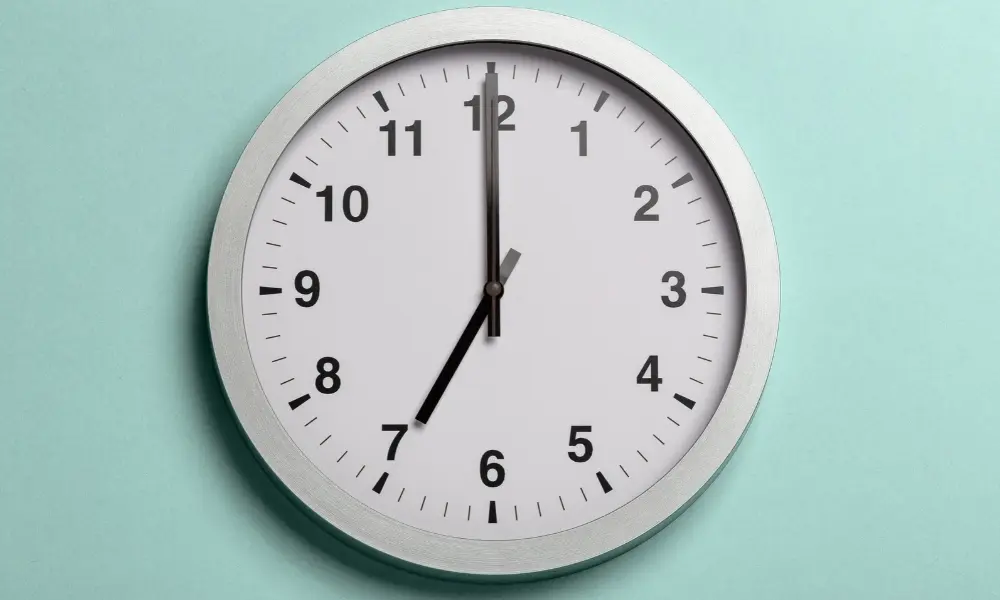
This is one question I’ve heard possibly hundreds, if not thousands of times over the past 15 years I’ve been doing this.
And the answer is no, there is nothing that says you are going to gain weight if you eat after 7 p.m. The time itself isn’t what’s causing weight gain or preventing weight loss.
What matters more is what kinds of foods you’re eating after that time, how much food you’re eating after that time, your daily activity levels, and how your eating schedule fits into your sleep routine.
What matters most is that when you eat after 7pm, it’s often when you take in too many additional calories for the day, particularly when you’re eating out of habit rather than hunger or eating out where it’s easy to eat 1000+ calories in one sitting.
If you’re someone who eats a decent dinner and then continues grazing for three hours after dinner, creating a natural end to eating for the day may be a surprisingly simple way to reduce your overall intake without changing dinner.
I do know when I stop eating after dinner, I always lose a few pounds pretty quickly. So it is an easy healthy habit to set up if it makes sense for you.
What If You’re Actually Hungry at Night?
If you’re genuinely feeling hungry every night, don’t just try to push through the hunger pangs. Instead look at whether or not your dinner was substantial enough, if what you’re eating earlier in the day is enough calories, or if your schedule puts too long of a gap between dinner and bedtime.
Sometimes the solution isn’t just to stop eating at night. It’s to figure out why you’re feeling overly hungry in the first place.
And if you want dessert, eat dessert with intention. Then clean up, put the food away, make yourself a cup of tea, brush your teeth, turn off the kitchen lights, etc. If you’re still looking for food after all that, ask yourself whether you’re actually hungry or if it’s just become a bad habit or stress reliever. There are other ways to tackle both.
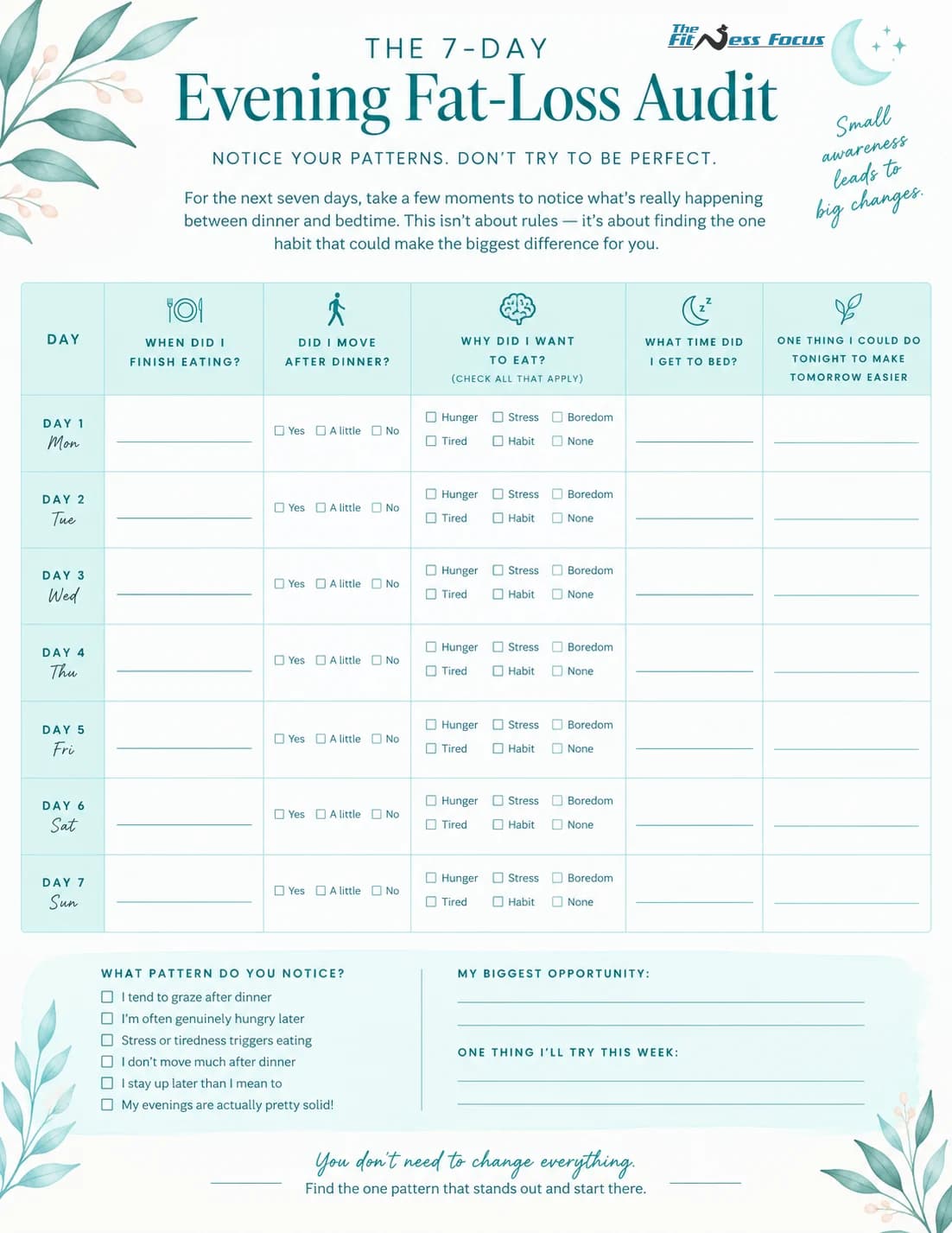
7-Day Evening Fat-Loss Audit ← your unique lead magnet
Evening Habits That Don’t Matter as Much as You Think
There is definitely a lot of different information out there about what matters in your nightly routine. So here are some common misconceptions I find all the time.
Eating after 7 automatically causes fat gain.
This just isn’t true. Your total calorie intake, food quality, activity level, individual needs and eating patterns matter far more than a set time on the clock.
You have to fast for 12+ hours to lose weight.
Not necessarily. Fasting is very much a personal preference. Some people enjoy time-restricted eating and some don’t. There’s no wrong way. But a longer overnight fast isn’t a requirement for fat loss. I know I don’t fast, and I still can lose weight when I want to.
Carbs at night automatically turn into fat.
Again, this just isn’t true. Poor carbs have such a bad rep. A calorie is a calorie whether it’s from carbs or fat. And when you eat more calories than your body can burn in a day, you will gain weight. But carbs definitely are not uniquely fattening because you’re eating them at night.
You need to exercise before bed to burn more calories.
You don’t need a nighttime workout to burn more calories. Oh my gosh this just isn’t a good idea for most people. If you enjoy exercising at night, that’s great. If you hate exercising at night, a walk after dinner or simply being more active throughout the day, is perfectly reasonable.
That’s because exercising too close to bedtime can actually interrupt a peaceful night’s sleep and lead to weight gain.
You need a “perfect” evening routine.
You do not need the perfect nighttime routine to lose weight. One evening of eating dessert, skipping a walk, or staying up too late isn’t going to determine the results you get. It’s your overall daily habits that matter much more. Remember consistency will beat perfection every single time.
If you feel like your evening routine could be better, download my free 7-Day Evening Fat Loss Audit here.
Conclusion
You don’t need to change up your entire evening to make progress. What you can do instead is look at your own routine for a week and notice where or when things tend to go off track.
Maybe it’s a handful of snacks…every time you walk through the kitchen.
Maybe you’re eating your dinner too early and are actually ravenous before bed.
Or maybe it’s just because you’re tired and worn out from a long hectic day and using food as a form of relaxation.
The good news is there are ways to fix any of these issues. Just find the one part of your evening that has the most room for improvement, and start from there. Then you can eventually fix everything over time.
Have any questions or comments? I’d love to hear from you!