
Disclosure: this page may include affiliate links which may earn me a small commission at no cost to you. As an Amazon Associate, I earn from qualifying purchases.
This post is the first in a series that’s going to be aimed at preventing injuries when working out with the Insanity program or any other higher intensity exercise program.
The Insanity workout is one of the most effective at-home workout programs ever created, because it produces remarkable results. The only con is that it lacks in flexibility training, which luckily, you can add some on your own.
Flexibility training is not just important to increase your flexibility, it can also help prevent injuries and help your muscles recover from training faster than they would without stretching. The result: less overall muscle soreness after working out, plus tendons and joints won’t hurt.
Who Needs Extra Flexibility Training?
This article is for anyone who is following the Insanity program or following any workout program that lacks a real focus on flexibility training. If you are over the age of 25, please pay even more attention to this article! It can really make an impact as you get older.
Two Types of Stretching – Dynamic & Streching
What is Dynamic Stretching?
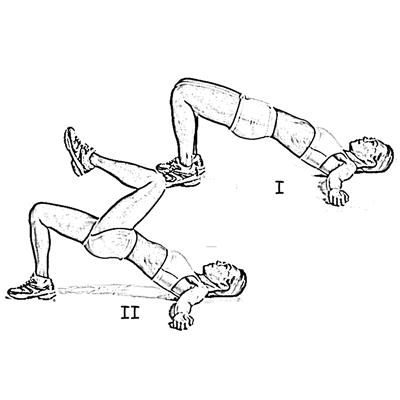
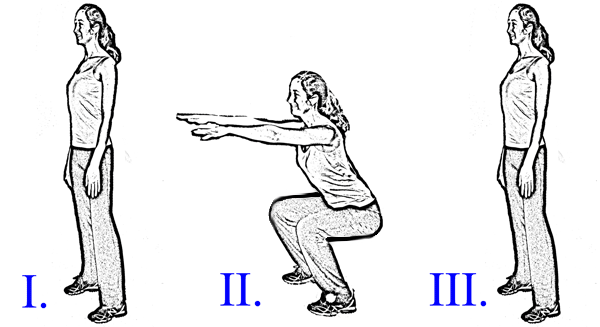
Dynamic stretches are a form of stretching focusing on continuous movement to bring the muscle into a stretch – they’re not held. This type of stretching is best performed before your workout to help get blood flowing to the area of your body that is about to be worked. Think of dynamic stretches as a way to prime your body for the exercises you’re about to do.
Core Benefits of Dynamic Stretching:
- Activates the muscles (warms them up) that are about to be worked out
- Quickly improves your range of motion
- Helps with balance and coordination
- Enhances muscle power and performance
What is Static Stretching?
Static stretching is the form of flexibility training that elongates the muscle by holding the stretch for a set amount of time while in a specific stretch position. Static stretches should be performed at the end of a workout to help the body cool down and prevent the muscles from tightening up after your workout.
Core Benefits of Static Stretching:
- Helps the body and mind relax
- Enhances muscle range of motion
- Improves posture
Dynamic Stretches to Perform Before Insanity
Below are a couple of videos I found on YouTube that demonstrate dynamic stretching exercises. You can perform the movements from these videos before any Insanity workout or home workout program from BODi anytime you feel like you need to limber up. They will help get your body ready for the strenuous exercise that is about to come.
You don’t have to follow the exercises in the videos exactly, but instead, use them as a reference and do which ones you think will provide you with an adequate warm-up. If you need more, do more. If you need less, do less.
Static Stretching After Intense Workouts
Static stretching should be performed after working out – and yes, that means right after your workout. For years, static stretching was considered to be a way to warm-up for exercise, but today, sports science has proven that static stretching before working out is not the right thing to do.
Static stretching before a workout can actually put you in more jeopardy of getting an injury, because you could injure yourself if your muscles are “cold” (tight) and you’re pulling them into deep stretches. You’ll also be at a higher risk for injury when working out. It is best to perform static stretches after your workout to help improve your mobility and range of motion, which in turn, can help reduce muscle soreness in the long run.
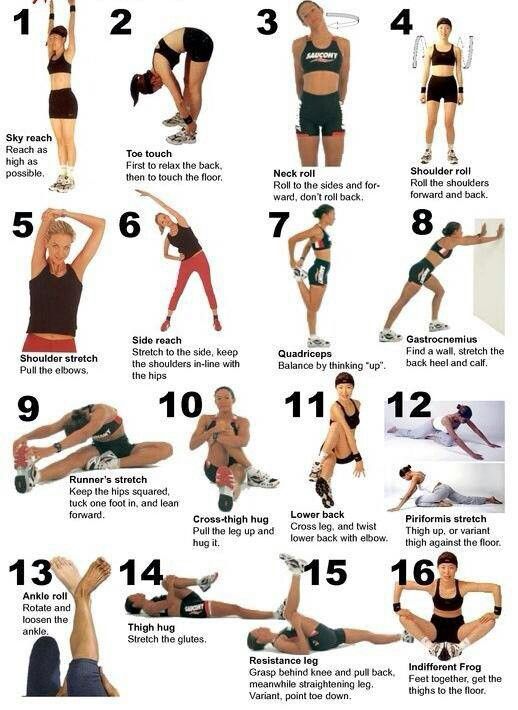
Below is a sequence of additional stretching you can do as a cool down following your workouts. Try to hold each stretch for 30 seconds and work both sides of your body.
Helpful Tools for Stretching at Home
While you don’t technically need any workout tools to help with dynamic or static stretching, below is a list of what I use and recommend to get the most out of your stretching:
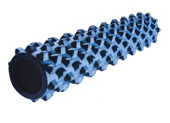
- TriggerPoint Grid Foam Roller: This is my favorite foam roller. It allows you to hit sore muscles with more or less pressure depending on your needs with its unique grid design.
- Thera Cane Massager: This self-massage tool allows you to target sore muscle that you otherwise might note be able to reach. Think middle of your back trigger points. You can control the pressure from light to deep to really work out those stubborn knots.
- Yoga Massage Balls, Yoga Blocks, and a Yoga Strap are also all wonderful tools to help you het more out of your stretches. These allow you to get deeper stretches that would be difficult to hold on your own.
None of these tools are necessary, but they can help you get more out of your stretching. In my experience the more you stretch, the quicker and better you will feel allowing you to train harder and recover faster in the long run.
Conclusion
Don’t wait until it’s too late! Start dynamic stretching before and static stretching after your most intense workouts like the Insanity program (I do after every workout no matter how intense) .
Just adding 5 to 10 minutes before and after your workouts not only dramatically reduces your risk of injury, it also lowers the time it takes to recover from the workouts, so you will feel better quicker!

Very Good
Thanks!
I used to get little injuries that would upset my routine, but I have been doing this everyday for the past 6 months and have stayed (touch wood) injury free
Awesome!